As sustainability programs scale, the challenge moves from reporting emissions to managing reduction efforts across complex operations and supply chains. Organizations need to identify emissions hotspots, engage suppliers, and track progress against climate targets.
Watershed is built to support this shift. It combines carbon accounting with tools for modeling, benchmarking, and decarbonization planning, helping organizations translate emissions data into action.
As sustainability programs continue to expand, some organizations begin to look beyond climate-focused tools toward systems that also support broader ESG data, reporting requirements, and cross-functional workflows.
This guide explains how Watershed is positioned, where it fits best, and how other platforms, including Sweep, compare when managing carbon, climate strategy, and sustainability data at scale.
What is Watershed and how does it work?
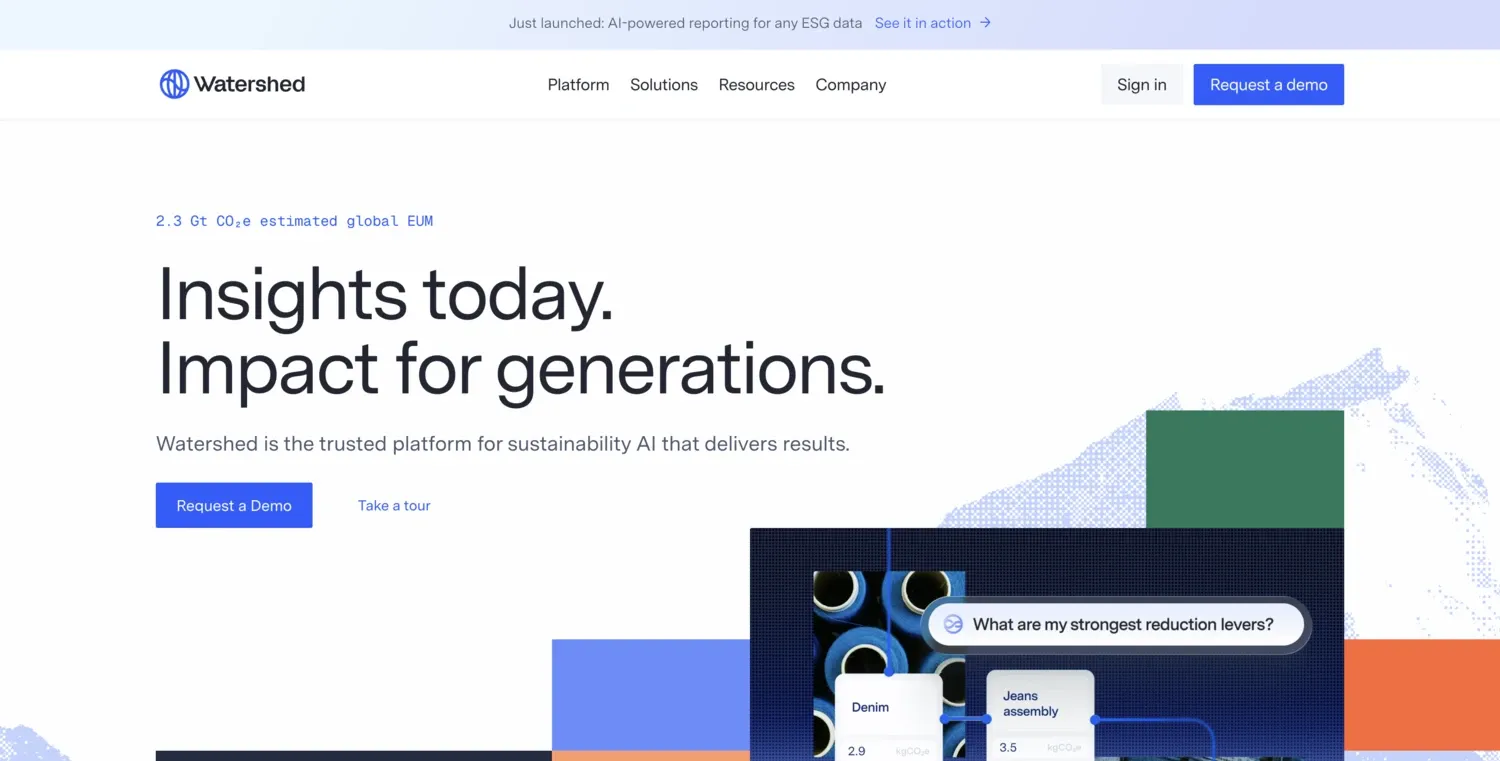
Watershed is a climate platform designed to help organizations measure emissions, report on carbon data, and plan decarbonization strategies.
It supports sustainability teams by:
- Using data analysis and AI-driven insights to identify emissions hotspots and prioritize reduction efforts
- Identifying emissions hotspots across suppliers, products, and operations
- Providing benchmarking insights to compare performance against peers
- Enabling scenario modeling to evaluate decarbonization strategies and reduction pathways
- Structuring carbon data for regulatory disclosures and investor reporting
This approach allows organizations to move from emissions measurement to reduction planning within a single platform, linking carbon data directly to decision-making and climate action.
When organizations may consider alternative approaches
As sustainability programs expand, carbon and climate initiatives become part of a broader set of requirements. Alongside emissions measurement and reduction, organizations need to manage how sustainability data is collected, validated, and used across the business.
In this context, some teams begin to evaluate platforms that extend beyond climate-focused capabilities.
Expanding beyond climate into wider sustainability reporting
Climate data is only one part of sustainability reporting. Organizations may need to track additional ESG metrics, manage disclosures across frameworks, and connect emissions data to broader performance indicators.
Managing multiple frameworks from a single dataset
Carbon reporting typically follows emissions standards, while broader ESG reporting involves frameworks such as CSRD, CDP, GRI and TCFD. This creates a need for systems that can support multiple requirements without duplicating data.
Coordinating data across teams and suppliers
Emissions data often relies on inputs from suppliers and internal teams, but so do many other sustainability metrics. Organizations may look for platforms that support coordinated data collection across functions and external partners.
Connecting reduction planning with operational workflows
Climate platforms focus on measurement and planning. As requirements grow, organizations may need systems that embed data collection, validation, and approvals into day-to-day processes.
Scaling sustainability as an ongoing process
Sustainability is increasingly managed throughout the year rather than at reporting deadlines. This requires systems that support continuous data tracking, validation, and audit readiness across the business.
5 alternatives to Watershed
These evolving needs prompt organizations to evaluate platforms that specialize in areas such as climate strategy, ESG reporting, and enterprise-wide sustainability data management.
Persefoni
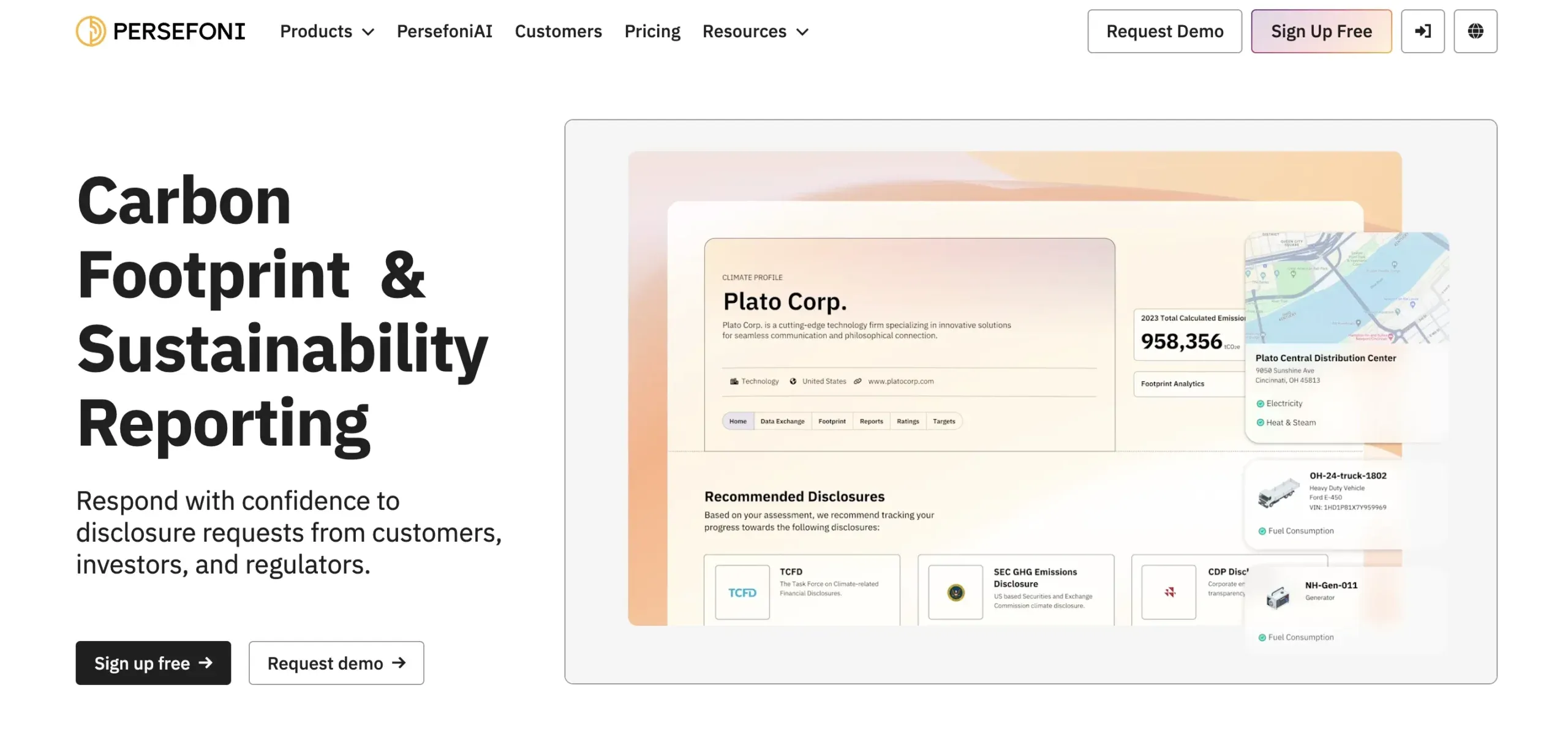
Persefoni is a carbon accounting platform designed to help organizations measure, manage, and report greenhouse gas emissions with a finance-aligned approach.
Compared to climate platforms, Persefoni places more emphasis on the accuracy and consistency of emissions calculations. It focuses on building a defensible carbon footprint, aligning emissions data with financial processes and supporting structured reporting.
Best suited for
Organizations that need detailed, audit-ready carbon accounting and emissions reporting, particularly in finance-aligned environments
Key features
- Carbon accounting across Scope 1, 2, and detailed Scope 3 categories
- Emissions calculation engine aligned with GHG Protocol standards
- Audit trails and controls for emissions data and calculations
- Reporting capabilities for regulatory disclosures and investor requirements
- Integration with financial systems and reporting workflows
Considerations
- Primarily focused on emissions measurement and reporting rather than decarbonization strategy
- Limited support for broader ESG data and multi-framework reporting
- May require additional tools for cross-functional data collection and operational workflows
Sweep
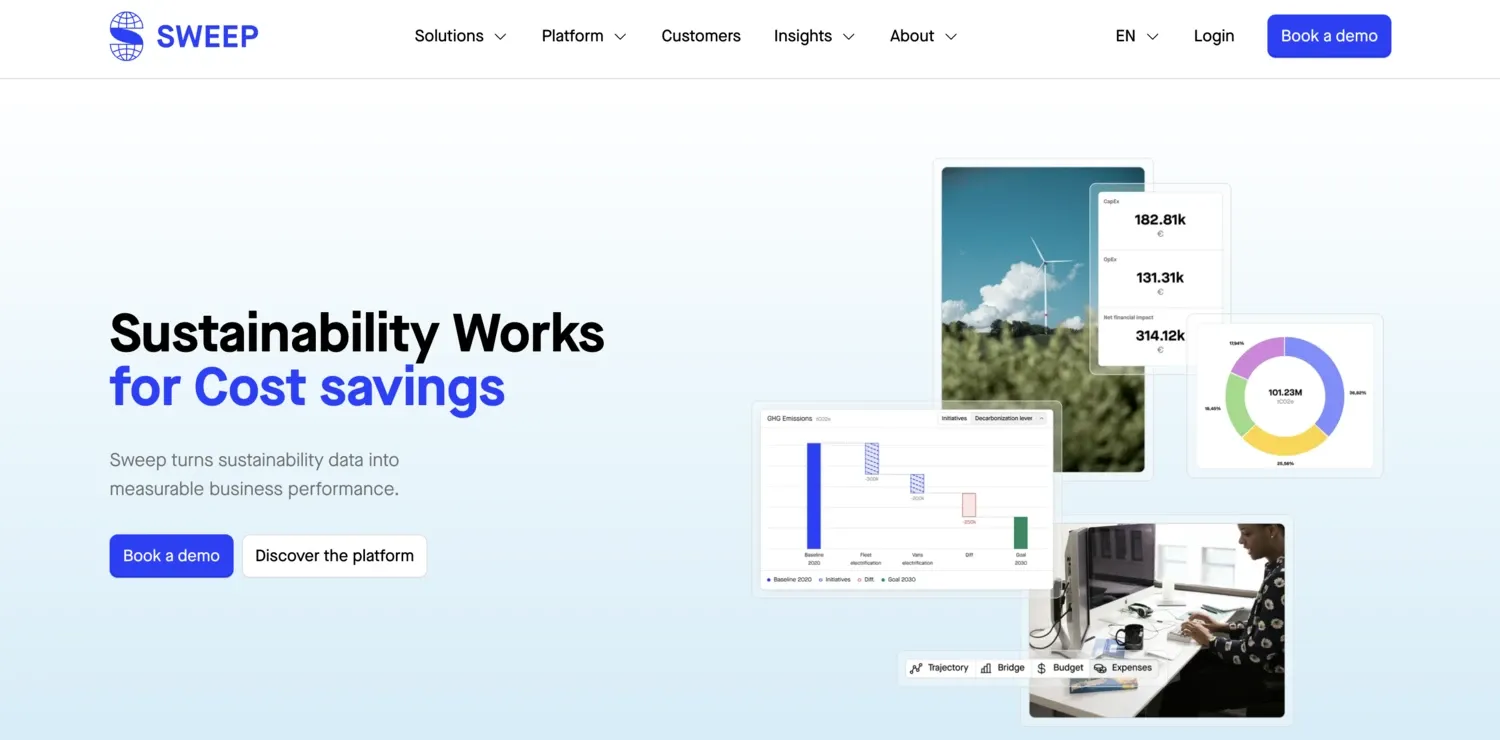
Sweep is a sustainability intelligence platform built for enterprises that need to go beyond climate-focused tools and manage sustainability as an ongoing, structured process across the business.
While climate platforms focus on emissions measurement and reduction planning, Sweep connects carbon data with broader ESG metrics, reporting frameworks, and operational workflows. This allows teams to collect, validate, and use sustainability data continuously, linking climate strategy with wider business processes and decision-making.
Best suited for
Organizations that need to manage carbon, ESG data, and reporting together, with cross-functional ownership and ongoing workflows across the business
Key features
- Workflow-driven data collection across finance, operations, procurement, and sustainability teams
- Full Scope 1, 2, and 3 carbon accounting across all categories, including complex value chain emissions
- Multi-framework reporting from a unified data model (including CSRD, TCFD, and other requirements)
- Audit-ready workflows with approvals, validation, and supporting evidence built into day-to-day processes
- Centralized sustainability data platform acting as a single source of truth
Considerations
- Requires internal ownership of sustainability processes to fully benefit from workflow-based capabilities
- It may be more comprehensive than needed for organizations focused primarily on carbon measurement and decarbonization
Plan A
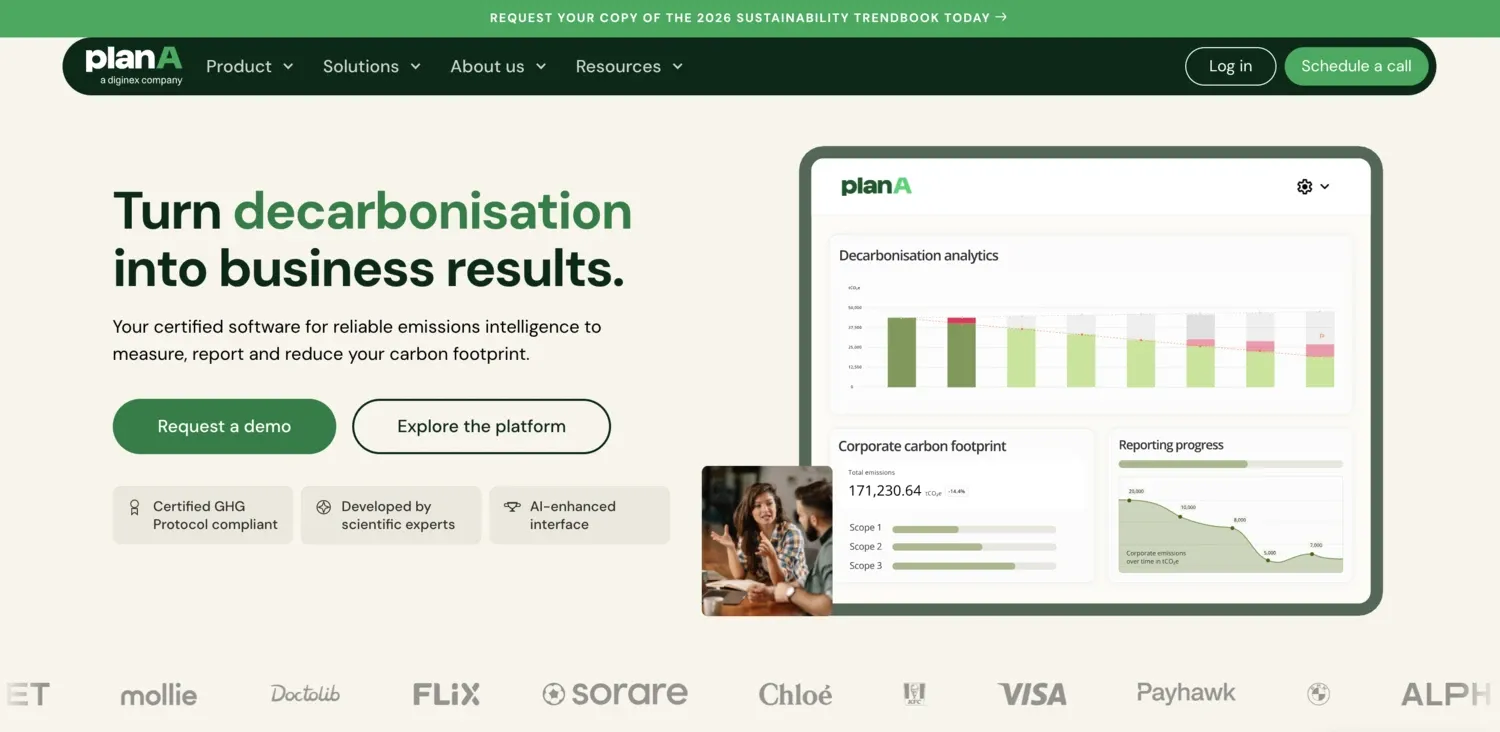
Plan A is a sustainability platform that integrates carbon accounting, ESG data management and decarbonization planning.
It allows organizations to connect carbon data with sustainability goals, track progress over time, and support reporting across multiple frameworks.
Best suited for
Organizations looking to manage carbon emissions alongside ESG reporting and sustainability planning within a single platform
Key features
- Carbon accounting across Scope 1, 2, and 3 emissions
- ESG data tracking and reporting across multiple frameworks
- Tools for setting targets and tracking sustainability performance
- Decarbonization planning and transition strategy support
- Reporting aligned with regulatory and investor requirements
Considerations
- May not offer the same depth in carbon accounting as specialized platforms
- Workflow capabilities and cross-functional data collection may be less developed than system-based approaches
- May require additional tools for highly complex, enterprise-scale sustainability programs
Workiva
Workiva is an AI-powered platform for data-driven finance, risk and sustainability. It is widely used by large enterprises to manage financial, ESG, and regulatory disclosures in a controlled, audit-ready environment.
Rather than focusing on emissions analysis or decarbonization, Workiva is centered on how disclosures are created, reviewed, and published.
Best suited for
Organizations that prioritize structured ESG disclosures and need to align sustainability reporting with financial reporting and governance processes
Key features
- ESG reporting aligned with frameworks such as CSRD, TCFD, and regulatory requirements
- Integrated financial and non-financial reporting within a single platform
- Strong audit trails, version control, and governance workflows
- Collaborative environment for managing reporting processes across teams
- Document and disclosure management for regulatory filings
Considerations
- Primarily focused on reporting and disclosures rather than emissions analysis or decarbonization planning
- Carbon accounting capabilities may require integrations or additional tools
- Less suited to managing sustainability data across decentralized teams and continuous processes
Envizi
Envizi, part of IBM, is an enterprise sustainability data and reporting platform designed to help organizations consolidate ESG and carbon data across complex operations.
The platform is built to aggregate and standardize data across the organization. This allows teams to maintain consistent datasets that support emissions tracking, performance monitoring, and regulatory disclosures.
Best suited for
Large enterprises that need to consolidate ESG and carbon data across multiple systems and business units before reporting
Key features
- Centralized ESG and carbon data aggregation across business units and geographies
- Emissions calculations across Scope 1, 2, and selected Scope 3 categories
- Reporting aligned with frameworks such as CSRD, TCFD, and other regulatory requirements
- Data standardization and governance across complex system environments
- Integration with enterprise systems and existing data infrastructure
Considerations
- Focused on data consolidation and reporting rather than decarbonization planning
- May require coordination across multiple systems and teams during implementation
- Less emphasis on continuous, cross-functional data workflows compared to system-based approaches
Watershed vs Sweep at a high level
| Area | Sweep | Watershed |
| Core approach | Sustainability system built around workflows and ongoing data management | Climate platform focused on emissions measurement and decarbonization |
| Scope | Carbon, ESG data, workflows, and reporting in one system | Carbon emissions tracking and reduction planning |
| Data model | Unified across frameworks, supporting continuous workflows and data management | Structured around emissions data, analysis, and AI-driven insights |
| Scope 3 | Full coverage with workflows for collecting and validating value chain data | Strong Scope 3 measurement and supplier engagement capabilities |
| Workflows | Cross-functional data collection and validation across teams | Focused on emissions tracking and reduction initiatives |
| Ownership | Shared across finance, operations, procurement, and sustainability teams | Typically led by sustainability and climate teams |
How to choose the right platform
Choosing the right software or platform depends on whether your focus is on climate strategy or broader sustainability management across the organization.
- If your priority is measuring emissions, identifying hotspots, and planning decarbonization strategies, Watershed is a strong fit
- If sustainability data needs to extend beyond carbon into ESG reporting and operational workflows, a broader platform may be more suitable
- If Scope 3 emissions and supplier engagement are the main challenges, climate-focused platforms provide strong capabilities for managing value chain data
- If sustainability is owned across multiple teams and requires continuous data collection and validation, platforms designed for cross-functional workflows become more important
- If you are looking to connect carbon, ESG data, and reporting within a single system, an integrated sustainability platform may better support long-term scalability
From climate strategy to enterprise sustainability systems
Climate strategy is a critical part of sustainability programs, particularly for organizations focused on reducing emissions and meeting net-zero targets. Platforms like Watershed provide strong capabilities for measuring emissions and planning decarbonization efforts.
Yet, as sustainability requirements expand, organizations increasingly need to manage a wider set of data, workflows, and reporting obligations across the business. This shift requires systems that connect carbon data with broader ESG metrics, cross-functional processes, and regulatory reporting.
Sweep supports this transition by connecting sustainability data, workflows, and reporting within a single system, helping organizations manage sustainability as an ongoing, operational process.
Book a demo to see how Sweep supports sustainability across data, workflows, and reporting on a single platform.